Hungary’s Antonov An-2: A Biplane Over the Outskirts of Budapest
Flying over the outskirts of Budapest, the unmistakable silhouette of the Antonov An-2 offers a glimpse of a bygone era of aviation. Known affectionately as the Annushka and designated “Colt” by NATO, this rugged Soviet-designed biplane has been a familiar sight across Central and Eastern Europe for decades.

First flown in 1947, the An-2 was designed for practicality rather than speed or sophistication. Its distinctive biplane wings, fixed landing gear and powerful radial engine made it well suited to operating from relatively basic airfields. Its versatility saw it employed in agricultural spraying, parachute training, passenger transport and cargo operations.
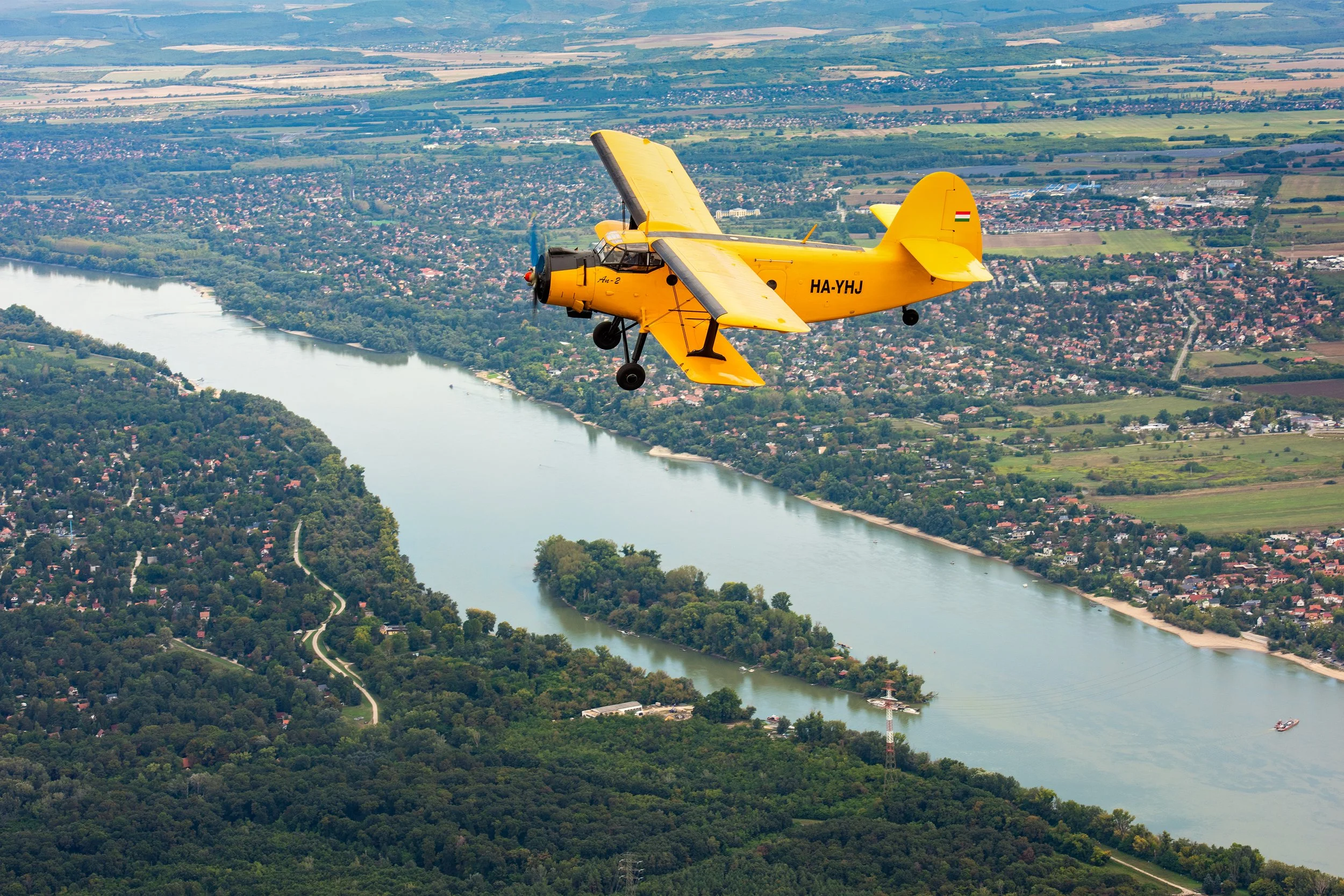


Although designed in the Soviet Union, thousands were manufactured in Poland, making the An-2 one of the defining utility aircraft of the former Eastern Bloc. Hungary developed a particularly strong association with the type, where it became an important workhorse of agricultural aviation, serving the country's farming industry for many years.
Today, surviving examples occupy a different place in the aviation landscape. No longer the ubiquitous agricultural machines they once were, they remain a tangible link to the development of post-war European aviation and the industrial connections that shaped the region during the Cold War.
Seen above the countryside on the outskirts of Budapest, the An-2 seems perfectly at home. Its slow, purposeful flight and unmistakable profile evoke an era when these sturdy biplanes were a common sight over fields and rural airstrips throughout Hungary.
More than seven decades after its first flight, the An-2 continues to capture the imagination of pilots and aviation enthusiasts. Its longevity is a testament to a remarkably versatile design — and a reminder that some aircraft become much more than machines, forming a lasting part of a country's aviation heritage.